


I was diagnosed with breast cancer this past February (spoiler alert: I no longer have breast cancer. Just so you can stop worrying and continue on reading). It was terrifying. Among the overwhelming emotions, including fear, sadness, and anger, there were also a lot of questions.
At first, it was questions about what exactly I was dealing with in my left boob. What stage was it? Had it spread beyond my boob? How fast was it growing? What kind of treatment would I need?
Once we got through answering those (stage 0, no lymph node involvement, fast-growing, double mastectomy), we moved to scheduling surgery, and thinking about what would come afterwards.
“We’re going to get you some cute new boobs and try to pretend this never happened,” said my surgical oncologist.
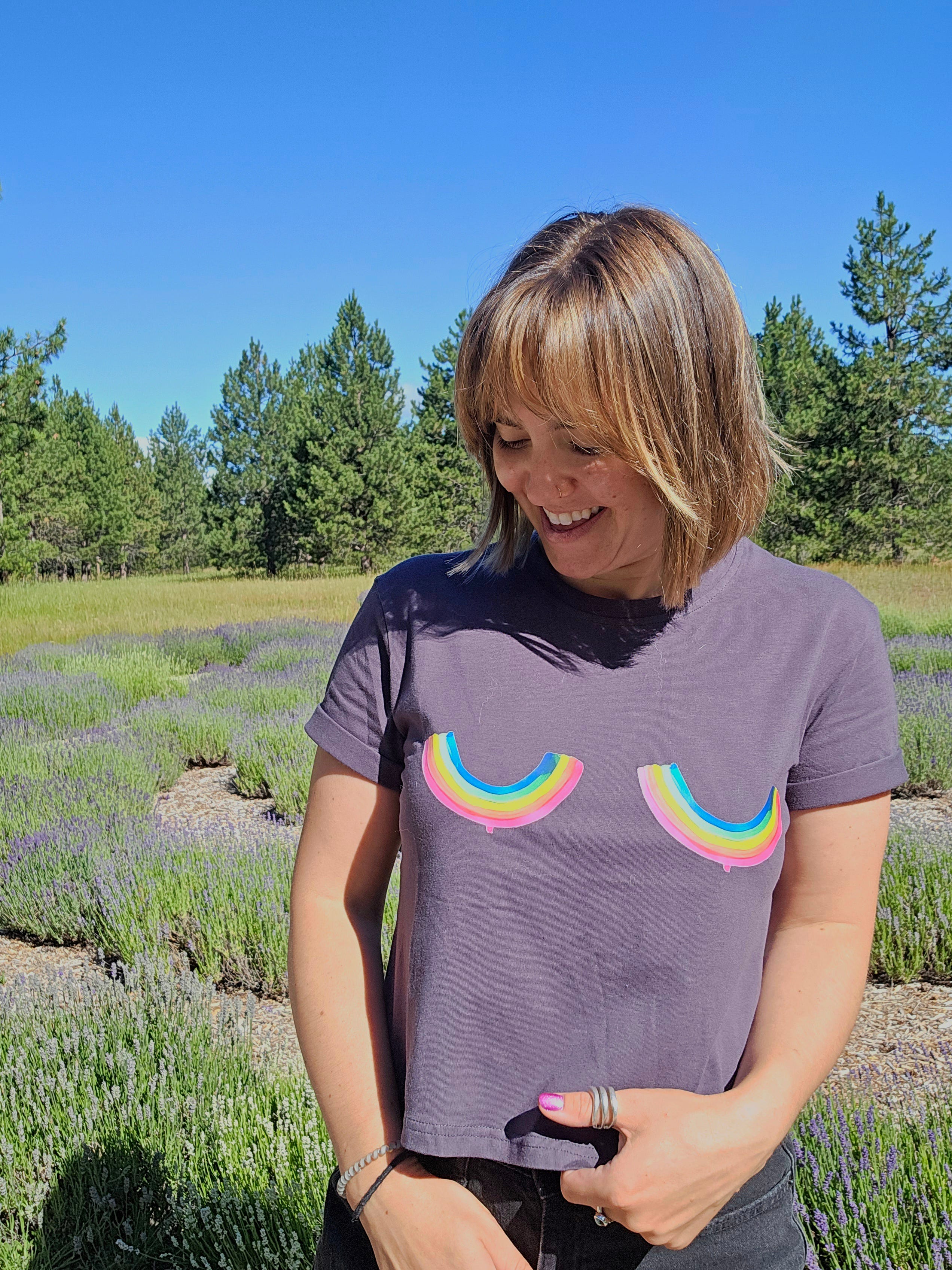
Obviously, thinking about my future cute new boobs was much more fun than the dread and worry that had filled my mind in the past week since my diagnosis. So after that, while I still spent many hours of many days worrying about the cancer, noticing new symptoms and wondering if that meant the cancer was spreading, knowing I wouldn’t have a full picture of things until my final pathology report a week after surgery… I got to start thinking about my dream boobs.
What size did I want? Was I happy with my real ones, and therefore want to try to get the same size? What shape did I want (yes, there are different shapes of implants! Who knew)? Did I want silicone or saline?
So many questions. And side note: I’m still waiting for my implant surgery at the end of September, so I still haven’t made the final decision on the size. Let me know if you have any thoughts. I’m mostly kidding…
At one point, I asked myself whether I even wanted new boobs. Going flat after a mastectomy is always an option, one that many people choose. As a queer woman, I found myself wondering: Would I be more queer if I didn’t reconstruct my chest? I thought about all the nonbinary and other queer people I admire who’ve gone flat as a way to feel more at home in their bodies. And wondered if choosing to reconstruct, caring so much about having boobs, would somehow make me “less queer,” or not queer in the “right” way. (That’s a whole rabbit hole we can dive down another day. For now, let’s just say: identity pressure is real. And so is boob decision fatigue.)
I use she/they pronouns, which to me means that I don’t always feel like being a woman is the first or most important thing about me. Sure, I feel like a woman - but sometimes, do I? (Again: rabbit hole. Stay on track, me.) Also, boobs are silly. (Even typing the word this many times feels silly.) Did I really need them?
Eventually I realized that, yes, I would feel more like myself having some boobs. I would feel like I’m in the right body, so that when I put on clothes, or look in the mirror, I like what I see.
So, I turned back to all of the other boob-related questions.
But you know what was never a question? Whether or not my insurance would cover me getting my new boobs. From that very first appointment with my medical oncologist, she knew that it was possible. Every time my plastic surgeon appointments have gone through to my insurance company, they’ve been approved.
And sure, I had cancer - so it would be really rude of my insurance company to say I couldn’t receive the treatment that would help me not only stay alive, but also feel like the most authentic version of myself.
Wait, did you hear that?
It would be really rude of my insurance company to say I couldn’t receive the treatment that would help me not only stay alive, but also feel like the most authentic version of myself.
That shouldn’t only apply to cancer patients. Transgender people deserve the same level of care.
No one gets a mastectomy just because it sounds fun. They get it because it is what their body needs to be safe and alive. And those who choose reconstruction get it because it helps them feel better in their bodies.
No one gets gender-affirming hormone therapy or surgery because it sounds fun. They get it because it is what their body needs to be safe and alive. Gender-affirming care is suicide prevention.
And yet, while I was - and still am being - freely offered care that helped me feel more at home in my body, trans people across the country are being denied that same right.
In case you missed it, this year, the Supreme Court celebrated Pride month by essentially saying that banning gender-affirming care for youth is cool with them. Specifically, in U.S. v. Skrmetti, the court ruled that Tennessee’s law banning gender-affirming hormone therapies for transgender people under 18 does not violate the Equal Protection Clause of the 14th Amendment. 25 different states currently have bans on gender-affirming medical care for transgender youth. But guess what, the banned medications are totally allowed for cisgender youth! Make it make sense.
Yeah, it doesn’t make sense. Gender-affirming care is backed by decades of research and every major medical association (read more about its importance here from the Human Rights Coalition).
And us cisgender people? We get it all the time. Not just when cancer forces us to remove our real boobs. But also when cisgender men need to raise their testosterone levels, or cisgender women need estrogen to manage menopause symptoms. Puberty blockers are allowed for the treatment of early onset puberty in cisgender youth. And about 500 other examples that all, at their core, allow people to feel like their body is working how they want it to, and matches how they feel on the inside.
So let’s be honest: gender-affirming care already exists all around us. Cis people get it without question. We’re handed prescriptions, referrals, and surgeries without needing to explain our gender, our pronouns, or our entire existence.
It only gets complicated when the person asking for that care is trans.
But it shouldn’t. Being alive is already complicated enough. We don’t need to make it harder for people to be safe, affirmed, and here.
So let’s do better. Let’s help each other access the care we all need - to live, to be well, and to feel like ourselves.
I had no idea you went through so much. I’m so happy you’re well now. Sending you so much love.