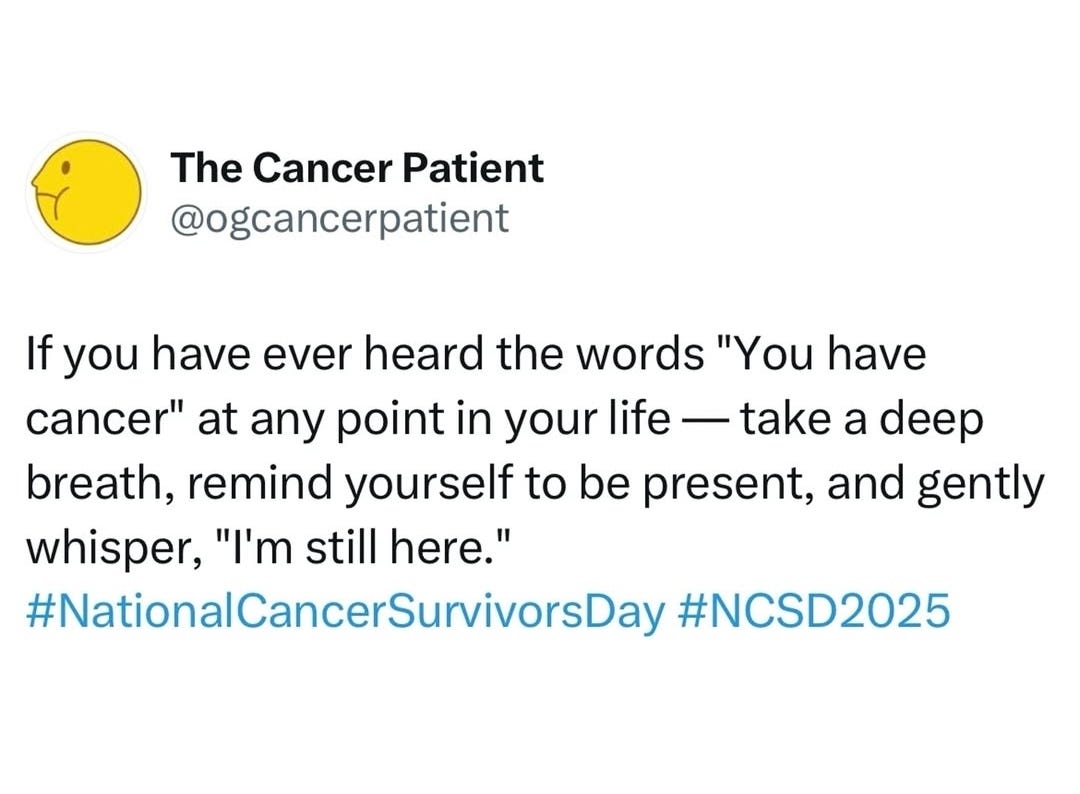

I have been thinking a lot lately about the title of “cancer survivor,” and I’m still not quite sure how I feel about it. Then today the “National Cancer Survivor Day” posts hit my feed… It’s like the universe (or at least the calendar) wants me to process this.
So do I fit into the club of cancer survivors?
Technically, yes. The oncology psychologist I spoke to a few weeks ago said I am now in “survivorship.” But it feels hard to claim. I found out I had cancer, and then found out I no longer had cancer, in a span of exactly three months. On February 5th, my whole life felt like it changed. On May 5th, I found out I didn’t need any more treatment. I still have appointments, like follow-ups, physical therapy, a second boob surgery coming up later this year. But the actual cancer-treating part is done. I don't need chemo or radiation, or other medications. I didn’t lose my hair.
So does it count?
First of all, I can’t really imagine that there’s some board of cancer survivors sitting somewhere reading this and saying, “Hey, this girl on the internet just called herself a cancer survivor, but she didn’t even have to do chemo. She doesn’t belong in our club!” So why is that how I make myself feel?

Since I'm currently in graduate school studying to become a mental health counselor, lately, when I'm asking myself questions like this, I think about what I would tell someone if they were my client in therapy. So let’s say a client comes to me after being diagnosed with breast cancer and getting a double mastectomy. They say to me in-session, “I don’t know if I count as a cancer survivor…” I think I would tell them, “of course you do. No, you don’t have to claim the label or call yourself anything that doesn’t feel right. But you absolutely deserve it.”
Because here’s the thing. No matter what cancer treatment you get, no matter what treatments you get to avoid, you don't get to avoid the trauma of the diagnosis. You don't get to avoid the week of waiting for the biopsy results, after hearing the words “you have cancer,” but not yet knowing what exactly you’re dealing with. In my case, it was a week of imagining worst case scenarios, picturing the rest of my life essentially, disappearing, all plans being halted, not knowing what I would have to do in an attempt to save my life.
When I was in that week, I heard from multiple people that the waiting is the hardest part. I imagine there can be harder parts for some people, depending on their situation, but for me, it ended up being true. It’s an acute period of knowing that there’s something in your body trying to kill you, but not yet knowing what the plan will be.
So to me, letting myself claim the title of survivor is honoring that, honoring the trauma my brain and body went through finding this out. Honoring the way in which I did everything I needed to do to take care of my body, starting with getting the lump checked out as soon as I could after I felt it. I feel extremely lucky and grateful that a surgery was able to handle this for me, that I caught it really early. But the cancer was still there.
Sure, the cancer was out of my body quickly, but so were my real boobs. That’s something I will forever live with - er, without. That part of my body is gone forever, currently replaced by weird expanders filled with saline (“alien boobs,” as one of my doctors - who went through this process herself - described them). Later this year, they’ll be swapped for implants in a second surgery. And I hope that someday I have moments in which I forget they aren’t my real boobs. But there are big areas of numbness on my chest that probably won’t ever let me forget that this happened. That permanent reminder is proof.
The cancer is gone. This new body is here. A body that I have to learn how to trust again. A couple of weeks after my mastectomy, my surgical oncologist told me that my job for the next however many months or years is to learn how to trust my body again, knowing that it betrayed me.
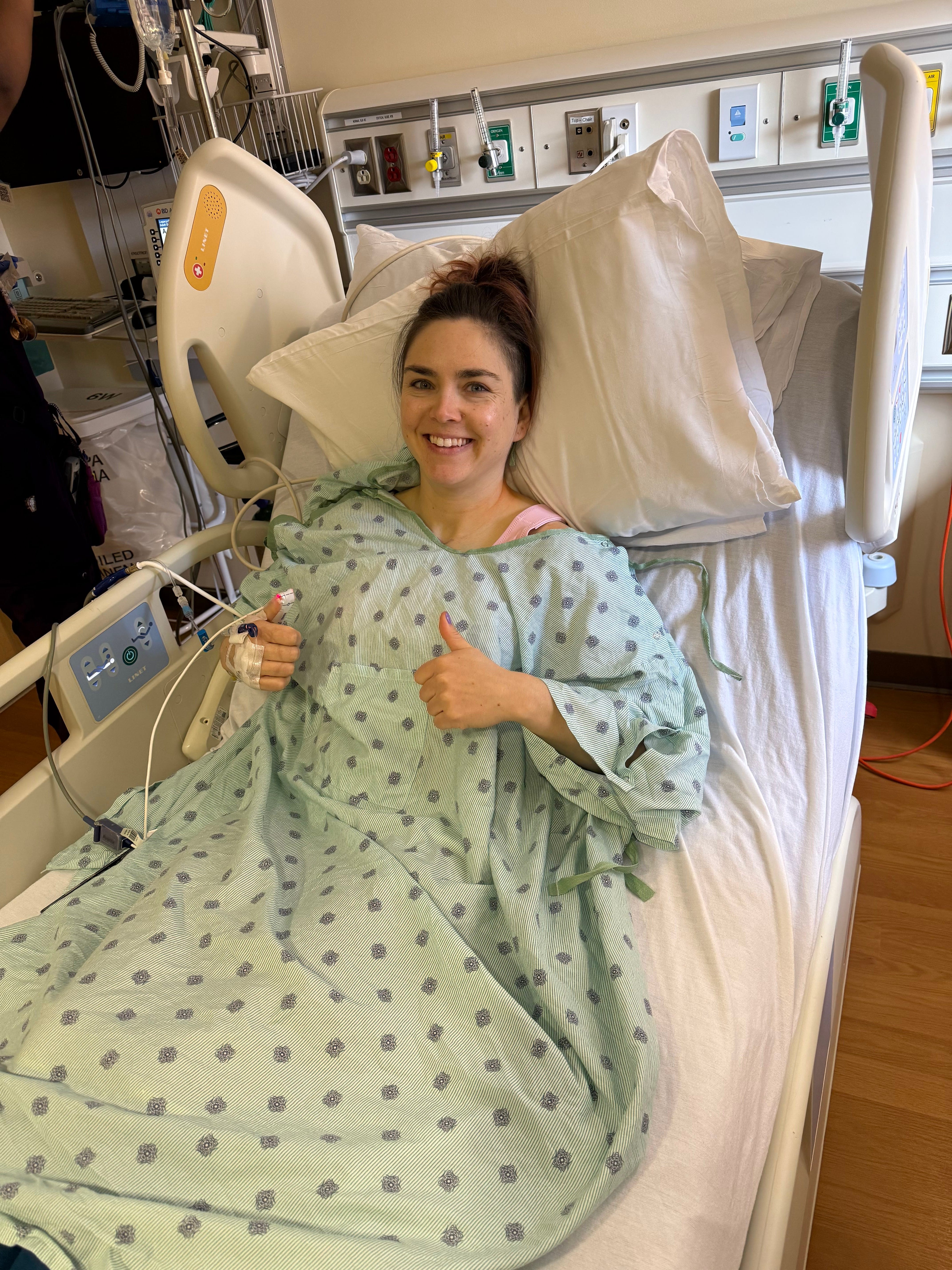
She used the metaphor of a car crash. After you get in a car crash, you eventually have to learn how to get back in the car, knowing that the car is dangerous now. Sure, the car was just as dangerous before, but now you’ve seen and felt the proof.
That’s how my body feels now. Before my diagnosis, I didn’t necessarily think I was invincible (I had just broken my leg less than two months before…), but I didn’t imagine anything like cancer could happen to me. Not at this age. Cancer was a loss of my naiveté, in a way. Similar to what I felt when I lost my mom to suicide back in 2021 - but that was a realization that anything can happen to any of my loved ones at any time. Now I know that’s true about myself too.
So that’s what being a “cancer survivor” means to me. It means living with the trauma of the diagnosis, the anxiety that it’s not really over, the fear that it will come back, and the permanent physical reminders that it happened.
But it also means living with a newfound gratitude for life and for my healthy body (as hard as it is to believe it). It comes with a newfound desire to do life how I want to do it, and not wait, because we never know how much time we have left. (Like, you know, starting a Substack because you’ve wanted to for a long time and now are finally ripping the Band-aid off…)
So maybe survivorship isn’t about how dramatic your treatment was, or whether you feel like you went through “enough” to deserve the title. Maybe it’s about honoring the fact that you went through something hard - letting that be true, and letting it mean something. The world already gives us enough messages that we’re not enough, that we have to try harder to fit in or belong. So why waste time and energy convincing myself I don’t fit into a club I’ve already earned membership in (and one I never even wanted to be in to begin with)?
That time and energy is much better spent figuring out exactly what size boobs I want to get in a few months.
If you’re not sure whether you “count” as a survivor either - for cancer, grief, trauma, or whatever else - you’re not alone in that feeling. At the very least, you belong to the club of people wondering if they belong. And that’s a club I’m proud to be in, too.